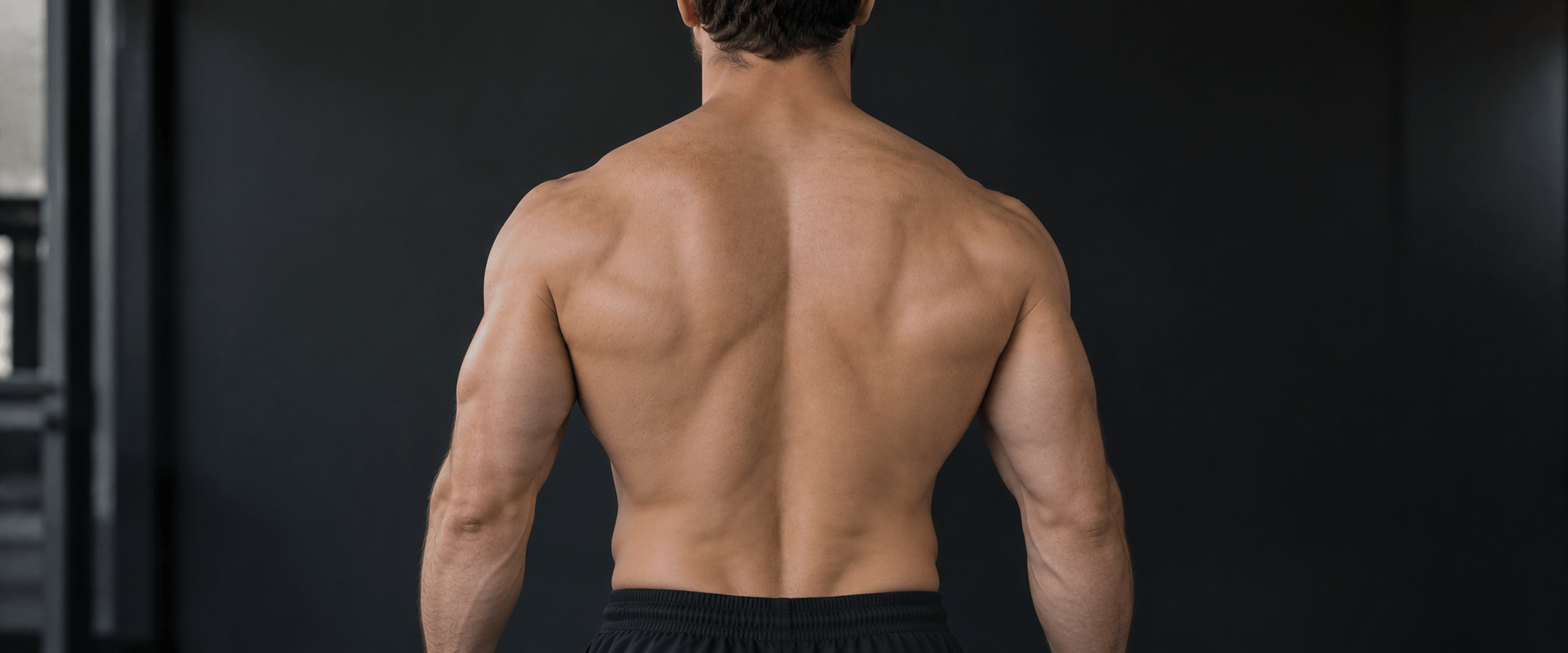
You Can Build Your Back in the Gym and Still Have Fat Hiding Its Shape.
The back can carry stubborn fullness in places that exercise alone cannot selectively control.
Upper-back rolls, fullness near the armpits, lower-back fat and the area above the waist can remain even when the chest, arms and abdomen are relatively lean.
Dr. Jonathan Lebowitz uses VASER 4D Hi-Def liposuction to reduce selected subcutaneous back fat while considering the muscular anatomy, waistline, flanks, lateral chest and skin that determine the contour from behind.
The Back Is Not the Same Fatty Layer as the Abdomen.
The tissues of the back can be relatively thick and fibrous. Connective-tissue bands run through the fatty layer and can make some areas feel firmer and less mobile than softer abdominal fat.
Dr. Lebowitz evaluates how much of the visible fullness is actually removable subcutaneous fat, where the tissue is most fibrous and how the surrounding skin is likely to respond after volume is reduced.
This is one reason the back deserves its own treatment strategy rather than simply extending an abdominal liposuction pattern around the torso.
A Narrower Waist From the Front Can Still Look Wide From Behind.
The posterior torso can dramatically influence whether the body looks tapered, athletic and proportionate.
Lower-back and flank fullness can blur the transition between the rib cage and waist. Upper-back fullness can obscure the muscular shape above it. Treating these areas selectively may allow the natural torso taper to become more apparent.
Influences the contour beneath the shoulders and beside the lateral chest.
The underlying latissimus anatomy contributes to the broad-to-narrow shape of an athletic male torso.
Excess volume can visually thicken the posterior waist.
Love-handle fullness wraps around the sides and often affects both front and back views.
VASER does not create back muscles. Hi-Def sculpting can only work with the muscular structure and body proportions already present.
Upper-Back Fullness and Lower-Back Fullness Shouldn’t Be Treated as the Same Thing.
Upper Back
Fullness can sit beneath the shoulder blades, around the posterior axillary fold and toward the lateral chest.
Mid Back
Horizontal folds or localized rolls may become visible beneath clothing or when the torso bends.
Lower Back
Fat above the pelvis can soften the lower torso and make the waist appear wider from behind.
Flank Transition
The side of the waist connects directly into the back, making this transition important to the overall silhouette.
Use Ultrasound to Prepare the Fat — Then Sculpt the Layer That Remains.
VASER uses ultrasound energy within selected subcutaneous fatty tissue to assist with fragmentation and emulsification before aspiration.
That can be particularly useful when working in body regions where the fatty layer contains substantial fibrous connective tissue.
But VASER is still only the technology. Dr. Lebowitz determines where volume needs to be reduced, how aggressively each zone should be treated and how the remaining tissue should transition into surrounding anatomy.
That Roll Beside the Armpit May Be Part of a Bigger Torso Problem.
In men, upper-back fullness can blend into the posterior axillary region and lateral chest. That relationship becomes especially important when a patient also has gynecomastia or fullness extending around the side of the chest.
Treating the front of the male chest while ignoring substantial lateral or posterior fullness can leave the torso looking disconnected.
Dr. Lebowitz therefore evaluates the entire transition rather than assuming the chest ends at the front edge of the armpit.
The Goal Isn’t a Flat Back. It’s a Better-Shaped Back.
A completely flat posterior torso is not necessarily an athletic one.
Male back contour is influenced by the shoulders, latissimus muscles, rib cage, waist and pelvis. When appropriate, reducing fat around these structures can improve the visual contrast between a broader upper torso and narrower waist.
The underlying muscular anatomy remains the blueprint. Dr. Lebowitz’s job is to decide whether selected fat is obscuring it and how much reduction the surrounding tissues can support.
TAPERLateral Torso
NARROWERWaist
Turn. Raise Your Arms. Flex the Back. Check the Contour Again.
For many appropriately selected procedures, Dr. Lebowitz performs VASER body sculpting with the patient awake under local anesthesia.
That can allow him to assess the back beyond a single prone surgical position.
Depending on the areas being treated, Dr. Lebowitz may ask the patient to change position, rotate the torso, reposition the arms or contract the back musculature while he evaluates how the skin and remaining fatty layer move over the structures beneath them.
The folds and transitions of the back can change significantly with arm position and torso movement, making dynamic reassessment useful when the procedure and patient are appropriate for it.
Local anesthesia is not appropriate for every patient or every extent of back and torso sculpting. Dr. Lebowitz determines the anesthetic plan individually.
The Lower Back and Love Handles Usually Need to Be Judged Together.
Lower-back fat often blends directly into flank fullness. If one region is reduced dramatically while the adjoining area remains prominent, the boundary between treated and untreated tissue may become more noticeable.
This does not mean every back patient automatically needs flank liposuction. It means Dr. Lebowitz evaluates the posterior waist circumferentially before deciding where treatment should begin and end.
What Will the Skin Do After the Back Gets Smaller?
The existing page correctly recognizes that skin quality can determine whether VASER alone is enough.
After the fatty layer is reduced, the skin must re-drape over the new contour. Age, elasticity, previous weight changes, stretch marks and the amount of volume reduction can all affect that process.
Dr. Lebowitz evaluates the skin separately from the fat. Where appropriate, Renuvion may be considered as an adjunct for skin quality and laxity. More substantial excess skin may require a different surgical strategy.
The Question Is Whether the Fullness Is Something VASER Can Meaningfully Change.
Dr. Lebowitz considers the location of the fat, skin quality, muscular anatomy, body weight and how the back relates to the rest of the torso.
Localized Back Fat
There is a meaningful subcutaneous fatty layer contributing to upper-back, lower-back or posterior-waist fullness.
Reasonably Stable Weight
The objective is reshaping a persistent area rather than replacing substantial future weight loss.
Manageable Skin
The skin is expected to re-drape reasonably or its limitations can be incorporated into the treatment plan.
Realistic Definition Goals
You understand that VASER can reveal and refine existing anatomy but cannot create a muscular back that is not there.
Some Back Fat Is Most Noticeable When Clothing Compresses It.
Pressure from fitted clothing can make localized back fullness more obvious by creating a visible roll above or below the garment line.
Although Dr. Lebowitz’s body-contouring practice places a particular emphasis on the male physique, the same anatomical principle applies when women present with localized upper-back or bra-line fullness: the treatment plan must follow the actual distribution of subcutaneous fat rather than the line created by a piece of clothing.
The objective is a smoother transition across the surrounding back, not simply removing fat directly beneath the visible crease.
The Incisions Are Small. Their Placement Still Matters.
VASER and liposuction cannulas are introduced through small surgical access points.
Dr. Lebowitz positions these openings according to the body regions being treated and the directions required to contour the back effectively. Where feasible, they are placed in less conspicuous locations or natural transitions.
The scars typically begin small, but every surgical incision creates a scar and final scar appearance varies from patient to patient.
Turn the Patient Around Before You Judge the Waist.
Back contouring should be evaluated from more than one photograph.
Look at the upper-back rolls, lateral torso, posterior waist and lower-back-to-flank transition. Compare the three-quarter view as well as straight-on photographs. For male Hi-Def cases, pay attention to whether more of the natural V-shaped torso becomes visible.
Your Back Can Feel Swollen and Firm Before It Looks Refined.
Recovery varies with the amount of tissue removed, the number of areas treated and whether the back is combined with flank, chest or other body contouring.
Compression & Movement
Dr. Lebowitz may prescribe compression and provides instructions for walking, positioning and routine activity.
Swelling & Firmness
Back tissue can temporarily feel firm or uneven while swelling and internal healing evolve.
Upper-Body Exercise
Heavy pulling, lifting and strenuous back training resume according to the extent of surgery and individual healing.
Contour Settling
The visible transition across the back and waist continues changing as swelling decreases and tissues soften.
Smooth Contours Require Careful Planning — and Healing Still Has Variables.
Possible issues following VASER-assisted liposuction can include swelling, bruising, fluid collections, contour irregularity, asymmetry, numbness or sensory change, scarring, infection, skin injury and the need for additional treatment, among other surgical risks.
Because the back is a broad curved surface, small changes in thickness can become more noticeable as the patient bends, turns or raises the arms.
Dr. Lebowitz reviews the risks and limitations relevant to your anatomy and the extent of treatment being considered.
VASER Back Sculpting FAQs
Why is back fat so difficult to lose?
Your body determines where it preferentially stores and loses fat. Overall weight loss can reduce back fat, but it cannot selectively target one upper- or lower-back pocket. The back also contains substantial fibrous connective tissue, which can influence how the fatty layer feels and is treated surgically.
Can VASER treat both my upper and lower back?
Potentially. Dr. Lebowitz evaluates where the unwanted subcutaneous fat is located and whether the upper back, lower back, flanks or lateral torso should be incorporated into the same treatment plan.
Should my flanks be treated at the same time?
Not automatically. Lower-back fat and flank fat frequently connect visually, so Dr. Lebowitz evaluates them together. Whether both need treatment depends on the patient’s anatomy and desired contour.
Can VASER create a V-shaped back?
VASER cannot create the muscles responsible for a V-shaped torso. In appropriately selected patients, reducing selected fat around existing muscular anatomy and the waist may make the natural taper more visible.
Can VASER remove loose back skin?
No. Liposuction removes selected subcutaneous fat, not redundant skin. Skin may re-drape to varying degrees after fat reduction. Dr. Lebowitz evaluates elasticity separately and may discuss adjunctive skin treatment or direct skin removal when appropriate.
Can VASER back liposuction be performed under local anesthesia?
Dr. Lebowitz performs many appropriately selected VASER procedures under local anesthesia. This can also allow position changes and dynamic assessment during some procedures. The anesthetic plan depends on the patient’s health and the extent and number of areas being treated.
Where are the scars after back liposuction?
VASER-assisted liposuction is performed through small surgical access sites. Their exact number and location depend on the areas being treated and the directions Dr. Lebowitz needs for contouring. All incisions create scars, and final scar appearance varies.
When can I return to back workouts?
Return to heavy lifting, pulling movements and strenuous upper-body exercise depends on the extent of treatment and individual healing. Dr. Lebowitz gives activity instructions according to what was actually performed rather than assigning the same timeline to every patient.
Send More Than a Front-Facing Photo.
For an out-of-town VASER consultation, the back needs to be evaluated from behind, from both sides and from three-quarter angles so Dr. Lebowitz can better understand how the waist and torso connect.
A virtual consultation can begin that discussion before travel and help determine whether the concern appears isolated to the back or whether adjacent areas such as the flanks or lateral chest should also be assessed in person.
Turn Around. Your Back Should Match the Work You’ve Put Into the Front.
If upper-back rolls, lower-back fullness or a wide posterior waist are obscuring your shape, Dr. Lebowitz can evaluate how much is removable fat, what the underlying anatomy can reveal and how the back should connect with the rest of your torso.